How to Speed Up Treatment Notes and Health Blog Posts for Your Acupuncture Clinic with AI
Write acupuncture clinic treatment notes and health blog posts faster with Claude Code: prompts, a check script, and patient-data safety.
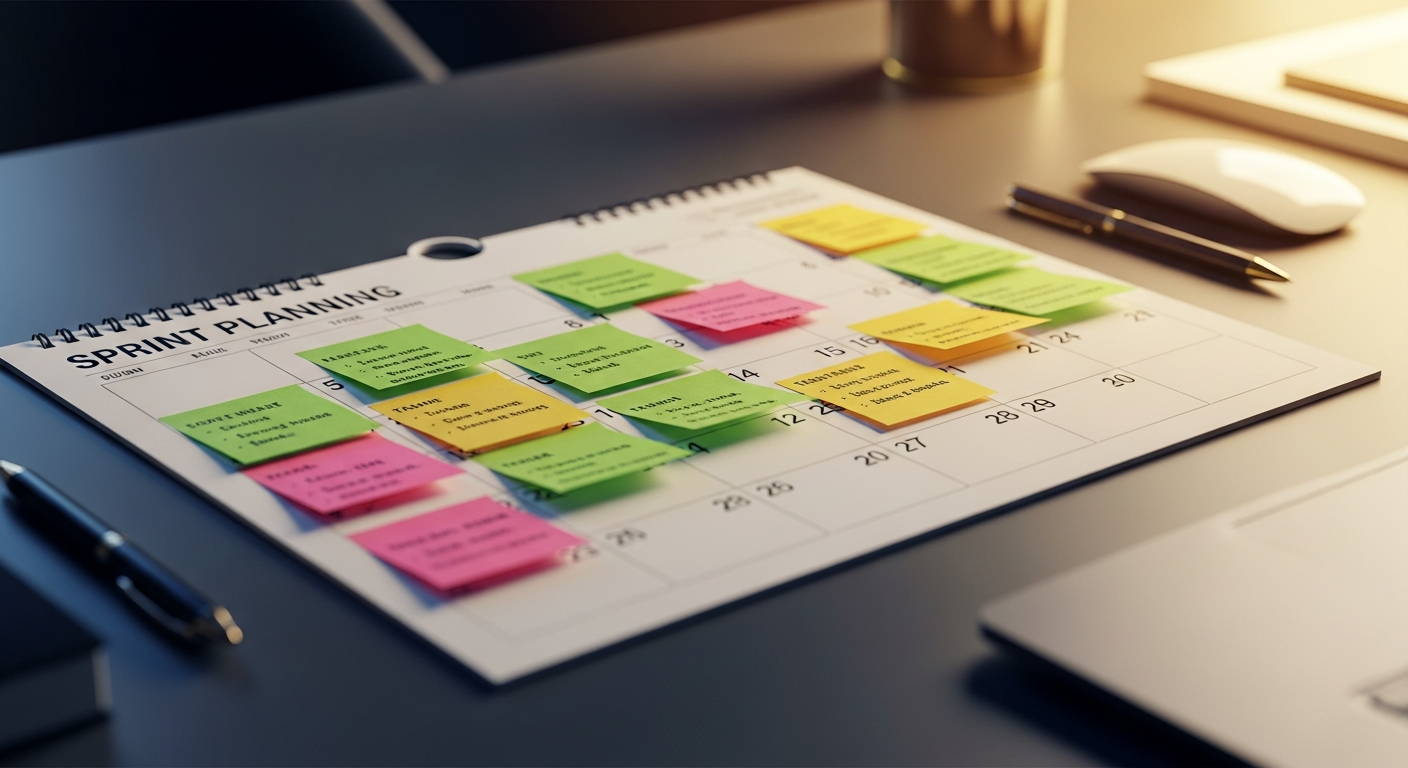
I had just sent off the last appointment of the day, and the clock read 8:30 p.m. I turned off the light at the front desk, and what came next wasn’t “reflecting on the day” — it was writing up the pile of treatment notes I’d let stack up.
The regular who came in for shoulder tension, the new patient with the strained lower back, the postpartum pelvic alignment client. I remembered exactly how tight each back felt and how many needles I placed. But turning that into clean written notes for the chart ate into my evening, night after night. Before I knew it, it was 9:30. By the time I confirmed the next day’s bookings, I had zero energy left to update the blog.
When a fellow acupuncturist told me, “I have AI draft both my notes and my blog posts,” I’ll be honest — it sounded sketchy. This is a job where you put your hands on people’s bodies. Was it really okay to hand any of it, even just the writing, to a machine? But once I actually tried it, my mind changed. The only thing you hand over is the chore of putting things into words. The judgment stays with me, start to finish. As long as you hold that line, those 30 minutes at the end of the night reliably come back.
This article is for acupuncturists running a clinic solo or with a small team. I’ll walk through how to speed up writing treatment notes and health blog posts with AI, based on what I actually tested myself.
Key takeaways
- Treatment notes are a great fit for converting “spoken shorthand” into “clean written records.” The clinical intake decisions and point selection themselves are never handed to AI.
- For health blog posts, let AI handle “topic ideas to outline to first draft.” A human strips out any medical claims or promises of results.
- Personal data (names, contact info, medical history) never goes to AI. You only feed in anonymized symptom notes. This is the number-one rule.
- The 30 minutes a day spent on write-ups and blog updates shrinks to around 10 once you’re used to it. That works out to roughly 7 hours of breathing room a month.
- At the end I’ve put a copy-paste prompt template and a check script that flags risky language in your blog drafts automatically.
Where the “writing work” in an acupuncture clinic gets stuck
For an acupuncturist whose real job is treatment, writing is the thing that always slides to the bottom of the list. But in practice, the writing quietly adds up.
Here’s how a typical day flows:
- Confirm bookings and prep (morning)
- Intake, palpation, treatment (all day)
- Quick scribbled notes right after each session (in the few minutes before the next appointment)
- End of day: clean up the notes and copy them into the chart (evening)
- Health blog posts and social media for marketing (if you can manage it)
The problem is steps 4 and 5. The notes you leave in step 3 are fragments: “Right scapula inner border, strong knots. Fengchi, Jianjing. Check neck next time.” Turning that into something readable later quietly drains your mental energy. Do it at night after a day of treatment, and even a few minutes per record stacks up into a 30-minute slog.
Step 5 stalls out completely at most clinics. You know that “writing health posts helps people find you in search,” but doing everything from topic to body copy alone takes two hours per post. There’s no way to keep that up.
Two common kinds of rework happen here. The first: you put off the write-up at night, your memory fades by morning, and you stare at the notes with no idea what you meant. The second: you force out a blog post that includes wording that crosses regulatory lines around medical claims, and you end up rewriting the whole thing. It’s the classic “this needle cures your herniated disc” mistake.
What to delegate to AI vs. what a human must always decide
Leave this fuzzy and you’ll have an accident. Let me lock down the boundary in a table first.
| Task | AI handles | A human must decide |
|---|---|---|
| Intake, palpation | Nothing | All acupuncturist |
| Point selection, needling | Nothing | All acupuncturist |
| Cleaning up treatment notes | Reshape fragments into written records | Final check that content matches the facts |
| Blog topic ideas | List candidates from season and symptoms | Whether they fit your patient base |
| Blog first draft | Generate outline and body copy | Remove medical claims and result guarantees |
| Wording review | Flag risky language around health claims | Final yes/no on publishing |
The way to remember it is simple: the judgments where you touch a body, and the publishing judgments where you carry responsibility, stay with the human. What AI does is convert what’s already in your head into words. For the broader mindset here, Claude Code for non-engineers is a useful reference. The sense of distance a non-engineer needs when slotting AI into their work applies just as well to an acupuncture clinic.
Use case 1: turning treatment shorthand into clean records
This is where you get the biggest payoff. You reshape the scribbles you make right after a session into records you can actually read later.
The key point: strip every piece of personally identifiable information out of the notes you feed in. Names become “Patient A,” ages get rounded to “in their 40s.” What you hand to AI is only the symptoms and the treatment.
Here’s a copy-paste prompt template.
You are a recording assistant for an acupuncture clinic. Reshape the
treatment notes below into a written record I can copy into the chart.

# Rules
- Split into 4 sections: Chief complaint / Findings / Treatment / Next plan
- Do not add symptoms or results that aren't in the notes (no guessing)
- Do not use wording that asserts results, like "cures" or "works"
- Keep technical terms as-is (acupuncture point names, needle depth, etc.)
- No personal data is provided, so do not invent identifying details

# Treatment notes
Patient A, 40s, strong knots at right scapula inner border, neck range
of motion slightly limited
Needled Fengchi, Jianjing, Tianzong; retained needles 10 min, light
sparrow-pecking
Came in for desk-work shoulder tension; assess neck next visit
Run this and you get a record neatly split into 4 sections. The one thing I check is whether it added any symptom that wasn’t in the notes. With the “no guessing” rule in place, that almost never breaks.
Wrap the before-and-after of each write-up in a checklist and your evening work becomes mechanical.
- Did I strip names, contact info, and addresses from the input notes?
- Did I round age to something like “in their 40s”?
- Has any symptom or result not in the notes crept into the output?
- Do the point names and treatment details match the facts?
- Is there any wording that asserts a definite result?
Use case 2: drafting a seasonal health post from idea to draft
Blog posts are the front door for new patients. An acupuncture clinic lives on its local area and repeat visits, so whether someone in search or on social thinks “this place looks like the real deal” really matters.
Split the delegation into stages. Don’t have it write the body right away — first have it produce only topics and an outline. The thinking behind staging prompts is laid out in advanced prompt engineering for Claude Code.
Here’s the topic-ideation prompt template.
Suggest 5 topic ideas for an acupuncture clinic's health blog.

# Conditions
- Season is the rainy season; the area has high humidity
- Target reader: office workers aged 40-60 who mostly sit at a desk
- Pick everyday complaints that tend to prompt a clinic visit
- For each topic, add one likely search keyword
- Don't write titles that guarantee results (no asserting "cures" or
  "improves")
Once candidates come back, I pick one that fits my patient base. That part is the human’s job. Once I’ve chosen, I move on to drafting the body.
In the body prompt, every single time I include “make no medical claims” and “always end with a line encouraging a medical visit.” That slashes the cleanup afterward. Acupuncture is an adjacent-to-medicine practice, so it’s safer to avoid asserting results and to let the writing carry a “see a medical provider if symptoms persist” posture.
Once the draft is up, the human starts cutting. There are mainly three kinds of things I cut:
- Wording that asserts a result (“acupuncture works for this symptom” -> “acupuncture offers an approach to this”)
- Thinly sourced numbers (unattributed stats like “90% of people improved”)
- Mentions of treatments my clinic doesn’t actually offer
Use case 3: tightening up inquiry and booking reply templates
Something that eats more time than you’d expect is replying to first-time inquiries. Pricing, what the first visit looks like, what to bring, how long it takes. Every time, I’m writing nearly the same thing, just reworded a little to fit the person.
This is a spot where having AI build a “polite base message plus situation-specific swaps” is fast. Set up a batch of templates once, and after that you just pick one and tweak it a little.
Write 3 reply templates for acupuncture clinic inquiries.

# Patterns
1. Asked about first-visit pricing and flow
2. Asked whether treatment is okay during pregnancy
3. A same-day cancellation comes in

# Tone
- Polite but not stiff; the feel of a trustworthy neighborhood clinic
- Don't guarantee medical results
- Don't stoke anxiety; lower the barrier to coming in
The flow of templatizing your work as a whole is covered concretely in practical productivity tips for Claude Code. Beyond replies, you can shape booking reminders and post-visit thank-you messages the same way.
Catching risky wording in posts with a machine
The scariest thing in a health blog post is when wording that asserts results or crosses health-claim lines slips in. The human eye alone misses it. So you put one machine gatekeeper in place.
Here’s a Node.js script that saves a draft to a text file and checks whether it contains risky words. It runs as long as you have Node.js installed.
// check-column.mjs : surface risky wording in a health blog draft
import { readFile } from "node:fs/promises";

// Words that tend to be problematic as result-claims / health claims
const ngWords = [
  "cure", "cures", "will cure", "fully cured",
  "guaranteed to work", "results guaranteed", "100%", "any illness",
  "heals disease", "cures cancer", "no side effects",
];

const file = process.argv[2] || "column.md";
const text = (await readFile(file, "utf8")).toLowerCase();

const hits = [];
for (const w of ngWords) {
  const needle = w.toLowerCase();
  let idx = text.indexOf(needle);
  while (idx !== -1) {
    const start = Math.max(0, idx - 30);
    const around = text.slice(start, idx + needle.length + 30).replace(/\n/g, " ");
    hits.push(`"${w}" ... ${around}`);
    idx = text.indexOf(needle, idx + 1);
  }
}

if (hits.length === 0) {
  console.log("OK: no risky wording found.");
} else {
  console.log(`${hits.length} item(s) need review:`);
  for (const h of hits) console.log(" - " + h);
  process.exitCode = 1;
}
Using it is just this:
node check-column.mjs column.md
When a risky word shows up, it lists the surrounding sentence right along with it. My rule is that nothing gets published until it passes this. Keep adding the phrases that made you wince to the word list, and it grows into a gatekeeper tuned to your own clinic. The way to write your clinic’s rules into CLAUDE.md and lock them in is summarized in CLAUDE.md best practices.
For the underlying thinking on what counts as a banned phrase, read through your local advertising and health-claims regulator’s guidance — for example, the U.S. FTC’s health products advertising guidance — and adjust the list to fit the scope of what your clinic actually does.
Personal data and security notes
This is the foundation you have to protect before any of the technology. An acupuncture clinic handles patients’ medical histories, which is deeply sensitive information.
Remember just three things to protect:
- Never input names, contact info, addresses, or dates of birth to AI. Round symptom notes down to “Patient A, 40s.” Don’t cross that line and no incident where an individual gets identified from your input can happen.
- Never make AI output the official version in the chart as-is. Treat it as a draft; the acupuncturist checks it and transcribes it. The responsibility for the record stays with the human.
- Confirm the setting where your input history isn’t used for training. Choose a business-tier setup or a plan where you can turn history off. Always check this before you sign up.
Before adopting it, people get stuck at “looks handy, but I’m scared of a data leak.” But once you decide that the only thing you’ll ever input is anonymized symptom notes, most of the fear evaporates. What changed after adoption wasn’t so much that the nightly write-up got shorter — it was that the rule for “what’s okay to input” got written down, and the staff stopped hesitating.
ROI estimate: how much of that nightly 30 minutes comes back
A rough back-of-the-envelope estimate. Not exact figures — just material for a decision.
- Treatment note write-ups: about 30 minutes a day -> roughly 10 with an AI draft plus a check. That’s a 20-minute difference.
- Health blog posts: writing 4 a month solo is about 8 hours -> hand the ideation and drafting to AI and stay check-focused, and it’s about 3 hours. A 5-hour difference.
- Inquiry replies: a few minutes saved per message once templates are in place.
The write-ups alone, at 20 working days a month, are roughly 400 minutes — 6 to 7 hours. Add the 5 hours from blog posts and you’re looking at around 10 hours of breathing room a month. Whether you convert that to an hourly rate or to time spent learning a new treatment technique, it’s not a bad investment.
On the cost side, you’re looking at AI usage fees in the range of a few dollars a month, plus a few hours up front to build the workflow and rules. The payback is on the fast side, I’d say. The least confusing way to take that first step is to start from the Claude Code getting started guide.
FAQ
Q. Is it okay to put a patient’s name and symptoms into AI? Personal data like names, contact info, and addresses do not go in. The only thing you input is an anonymized symptom note like “Patient A, 40s, shoulder tension.” Hold that one line and there’s no worry of an individual being identified from your input.
Q. Can I make AI-written records the chart as-is? No. The AI output is a draft. The acupuncturist confirms it matches the facts and transcribes it under their own responsibility. The responsibility for the record’s accuracy stays with the human to the end.
Q. If I have it write a post that touts results, won’t that cross health-advertising rules? You instruct it in the prompt to “make no definite claims about results,” and then you run the check script at the end to machine-scan for risky words. Between the human eye and the script, two layers, you cut down misses a lot.
Q. Can I adopt this even if I’m not good with computers? The only part that tends to trip people up is building the initial workflow, so either lean on someone who knows it or build the template in a training session. Once the template exists, the rest is just picking a prompt and running it.
Q. Is it worth it for a solo clinic? If anything, a solo clinic benefits most. With no one to share the admin work, the nightly write-ups and blog posts all land on you. The payoff from cutting that down is bigger than at a clinic with extra hands.
What I confirmed when I actually tried it
There were three things I checked.
The first was the treatment-note write-up. I fed in anonymized fragment notes and checked whether a 4-section record came back properly. After adding the “don’t guess at symptoms” rule, I ran about 10 records and zero contained information that wasn’t in the notes. My check came down to just “does this match the facts,” and the per-record write-up got noticeably shorter.
The second was the post check script. I deliberately ran a draft that said “this needle will definitely cure you,” and it picked up both “cure” and “guaranteed to work” along with the surrounding sentences. The machine stops a line a human eye would skim right past. That peace of mind was bigger than I expected.
The third was the effect of the input rule. After I wrote “only input anonymized symptom notes” on a piece of paper and stuck it up, the time spent hesitating over what’s okay to input vanished. More than the technology, that one rule on a sheet of paper had the biggest impact.
I wasn’t aiming for full automation. The judgments where I touch a body and the publishing judgments stay with me. On top of that, I hand over only the chore of putting things into words. That alone brought back the 30 minutes at the end of the night that used to disappear.
If you want to work out concretely how to fit this into your own clinic, training and consulting can help you design the workflow together from the ground up. If you’d rather try it solo first, start with cleaning up an anonymized note.
Free PDF: Claude Code Cheatsheet
Enter your email and download the one-page Claude Code cheatsheet for commands, review habits, and safe workflows.
We handle your data with care and never send spam.
Level up your Claude Code workflow
Start with the free PDF, use Gumroad guides when you need repeatable workflows, and book consultation when rollout or revenue paths need human judgment.

About the Author
Masa
Engineer focused on practical Claude Code workflows. Runs claudecode-lab.com, a 10-language technical media site.
Related Posts

The Agency Permission Checklist Before Claude Code Edits a Client Site
A client-work permission checklist for safe AI-assisted edits on landing pages and websites.
Turn SaaS Support Bug Reports Into Repro Steps With Claude Code
A support-team workflow for converting vague tickets into safe, reproducible bug reports.

Turn Stale Obsidian Notes Into a Claude Code Brief in 10 Minutes
Obsidian notes that turn to mush when pasted? Sort them into facts, decisions, and unknowns so Claude Code can act on them right away.
Related Products
Claude Code Quick Reference Cheatsheet
A free one-page reference for daily Claude Code work.
Keep the essential commands, file-reference patterns, CLAUDE.md reminders, prompting habits, review cues, and debugging workflow notes next to your editor.
50 Battle-Tested Claude Code Prompt Templates
Copy, paste, ship. 50 production-ready prompts.
Use proven prompts for code review, refactoring, testing, documentation, debugging, architecture, and incident response.